
Guides
The door, explained before the call.
Nobody researches garage doors for fun. You're here because something went bang, or because the old door finally looks as tired as it is. These guides answer the question you actually have, in the trade's real words, with no prices and no scare copy.
Urgent reading
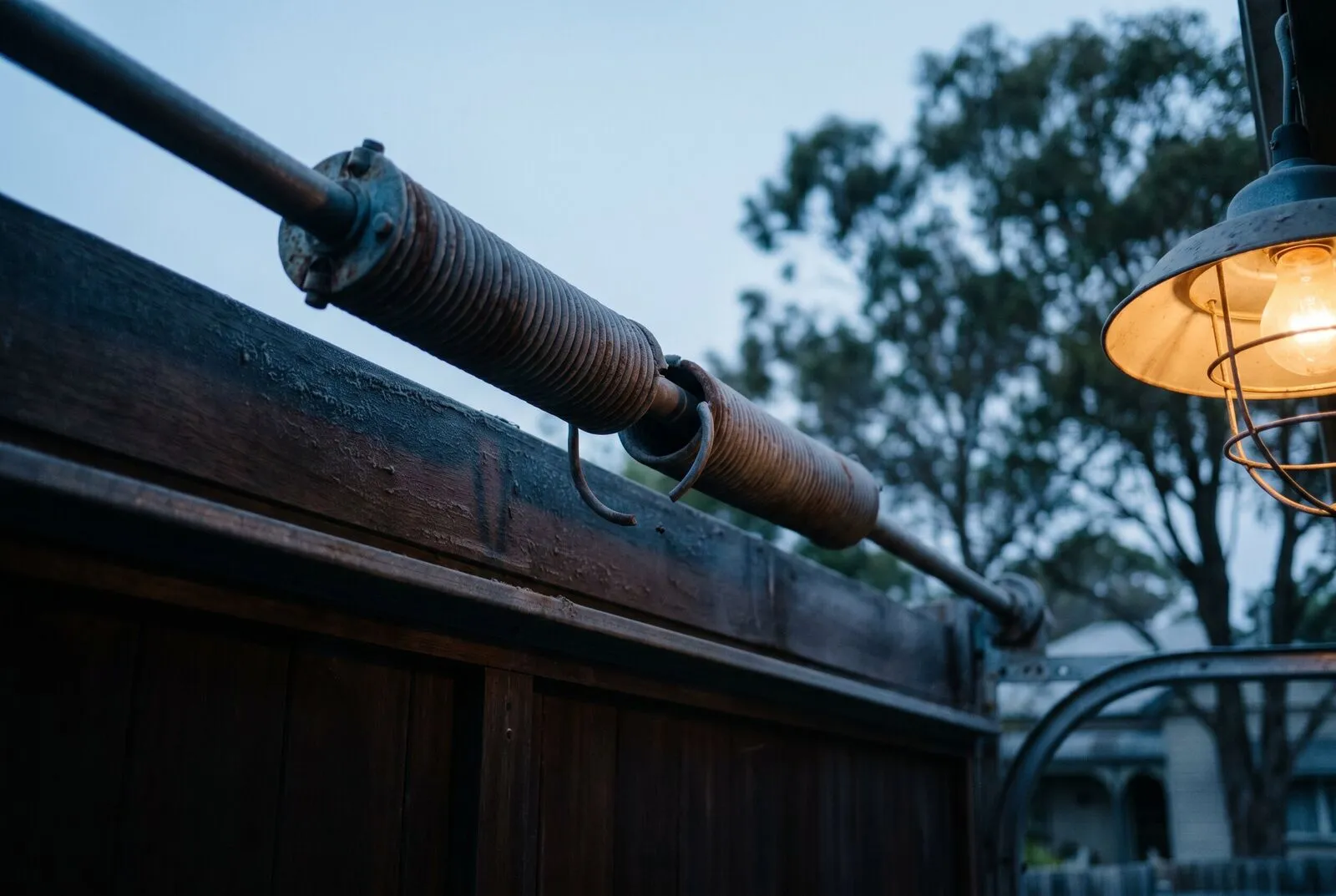
The bang before dawn
What a snapped torsion spring is, why it picked this morning, what not to touch, and what the repair actually involves.
Considered reading
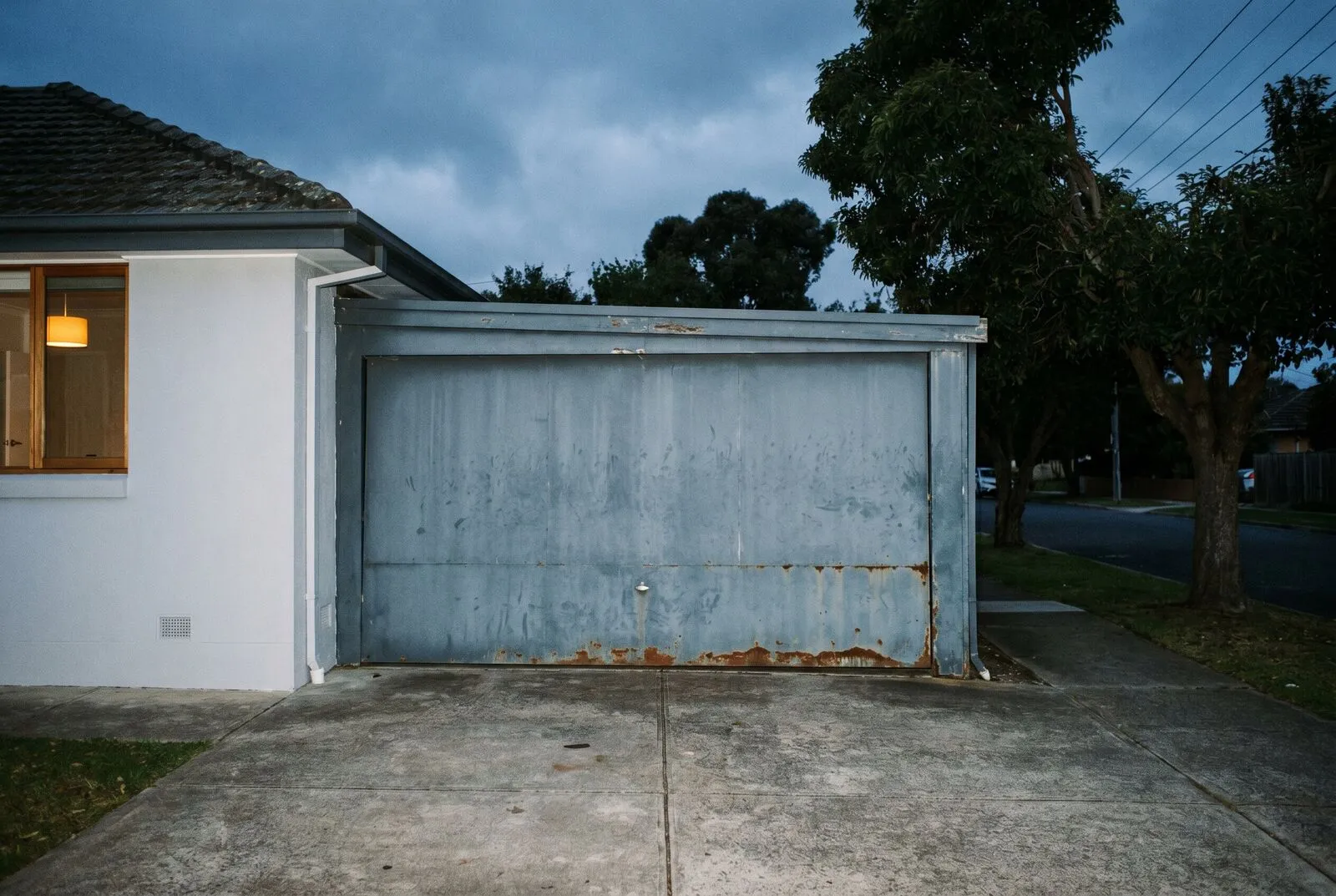
Repair or replace, said straight
The five questions that decide it for a decades-old door, and the common New Lambton picture where each answer wins.
More guides land as the same questions keep arriving in the form. Ask a good one and it'll probably end up here.
The glossary
The trade's words, translated
So the call back makes sense the first time it's said.
- Torsion spring
- The wound steel spring on a shaft above the door that stores the effort of lifting it. The door's muscle; the opener is only its nervous system. When one breaks, the door becomes dead weight.
- Extension springs
- An older counterbalance style: springs that stretch along the horizontal tracks instead of winding on a shaft. Common on older tilt and sectional doors; often upgraded to torsion during major work.
- Gone heavy
- Trade shorthand for a door whose counterbalance has failed or drifted: it technically opens, but it lifts like a fridge. A gone-heavy door is a spring or cable problem, not an exercise program.
- Off the track
- The door's rollers have jumped out of their steel guide track, so it sits crooked, jams, or grinds. Forcing it is how a repair becomes a replacement.
- Lift cables
- The steel cables that run from the bottom corners of the door up to the drums on the torsion shaft. A frayed cable is a warning; a snapped one usually drops one side of the door.
- Sectional (panel-lift)
- The modern standard: horizontal panels hinged together that rise and travel back along ceiling tracks. Best insulation and quietest run of the three types.
- Roller (curtain)
- A curtain of interlocked steel slats that coils into a drum above the opening. Needs the least headroom, which is why tight older garages run them.
- Tilt (one-piece)
- A single rigid panel that pivots outward and up. The legacy type on many original garages around here; mostly a repair market now.
- Safety beams (photo-eyes)
- The infrared sensors near the floor that make an automatic door reverse instead of closing on something. A door that refuses to close at night is often a beam doing its job, or asking to be cleaned.
- Manual release
- The red cord that disconnects the door from the opener so it can be moved by hand in a blackout. With a snapped spring it's a trap: pull it and you're holding the door's full weight.
- Call-out
- The visit. In this trade the honest price conversation happens at the door, after the fault's confirmed, agreed before work starts. Anything quoted sight-unseen is a guess.
- Measure and quote
- The first step for a new door: the opening measured properly (width, height, headroom, side room), the options talked through, then a written quote. Free, and unhurried.