
New doors · New Lambton
New garage doors in New Lambton
The last uncared-for thing on a renovated house.
The kitchen's done, the facade's painted, and the garage door is still the one from three owners ago. A new door is the most visible square metre-for-metre improvement on the street side of a house, and here it starts with a tape measure, not a catalogue.
Measure first
New Lambton openings don't take a stock swap
A lot of this suburb's garages were built when cars, and doors, were a different size. Original side-drive garages and under-house openings often run narrower or lower than today's stock sheets, and some carry brick piers or timber lintels that decide what can be fitted and how. That's why every new-door job here starts with a measure-and-quote visit:
- The opening, measured properly. Width, height, headroom above the opening, side room for tracks and springs. Headroom is the quiet deal-breaker: a sectional wants roughly 300 to 400 millimetres above the opening, a roller can live with around 200 to 250.
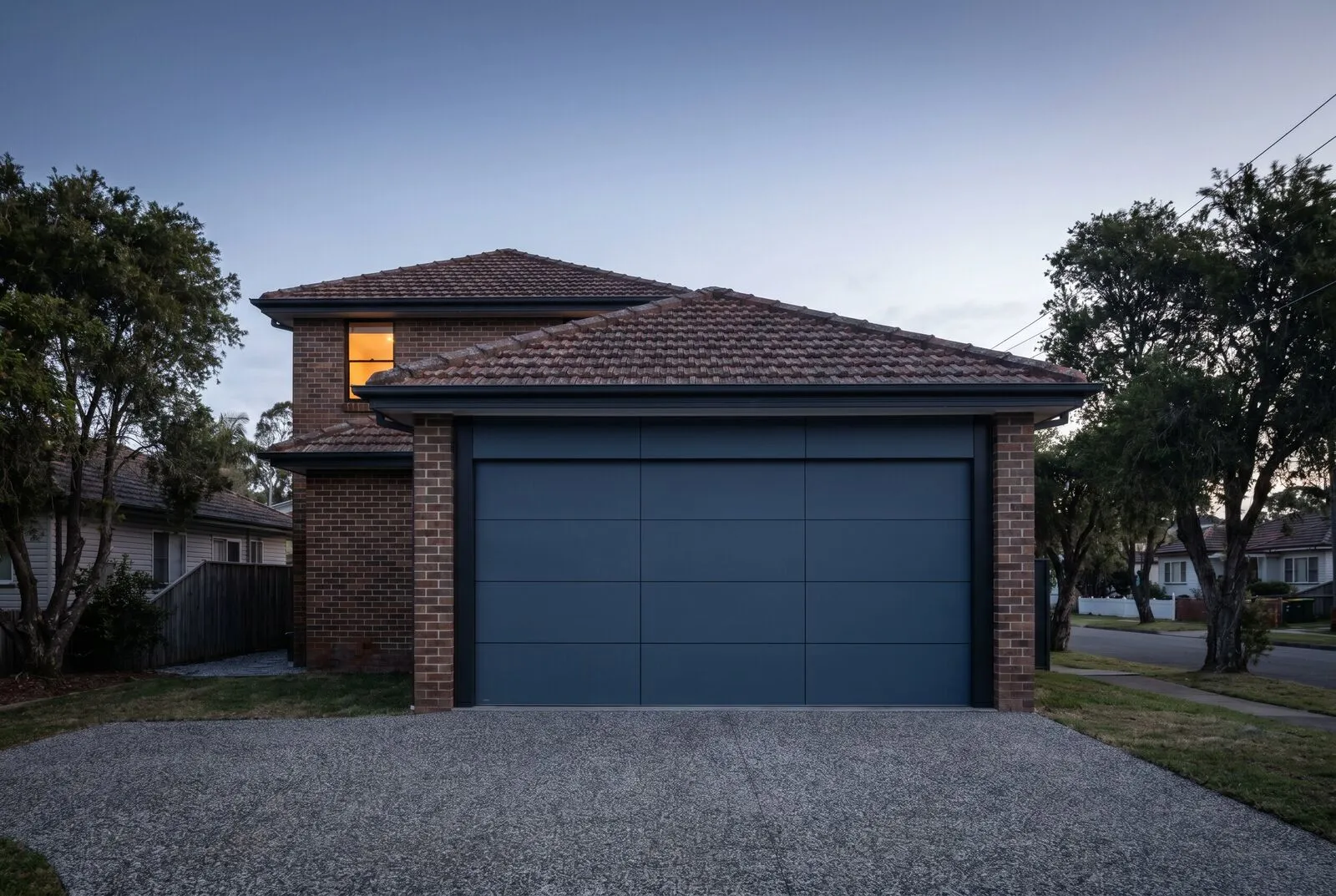
- The street, considered. A flat-profile sectional reads differently on a weatherboard bungalow than a ribbed one on brick-and-tile. You'll get an opinion, in plain words, about what belongs.
- The quote, written. One document, the door and the work described, at your pace. No deposit taken on the driveway, no countdown clock.
The three types
Sectional, roller or tilt, honestly compared
There's no best door, only the best door for a given opening, budget and household. The trade-offs, straight:
| What matters | Sectional (panel-lift) | Roller (curtain) | Tilt (one-piece) |
|---|---|---|---|
| Headroom needed | Most: roughly 300 to 400 mm above the opening | Least: roughly 200 to 250 mm | Moderate, plus swing room in front |
| Driveway clearance | None, it travels up and back overhead | None | The panel swings out as it opens, tight drives beware |
| Insulation and seal | Best of the three, insulated panel options | Lower unless a double-skin slat is chosen | Moderate, seal quality varies |
| Noise | Quietest, especially with a belt-drive opener | Can rattle unless well maintained | Moderate |
| Repairability | Panel-by-panel, spot-repairable | Curtain usually repaired or replaced as a unit | A repair market now, new installs are rare |
| Its natural home here | Renovated facades, garages with normal headroom | Tight under-house openings and low lintels | Already on many original garages, usually replaced rather than refitted |
General product-category guidance for Australian residential doors; the right fit for your opening is confirmed at the measure. Nothing here is a quote.
The shift-street spec
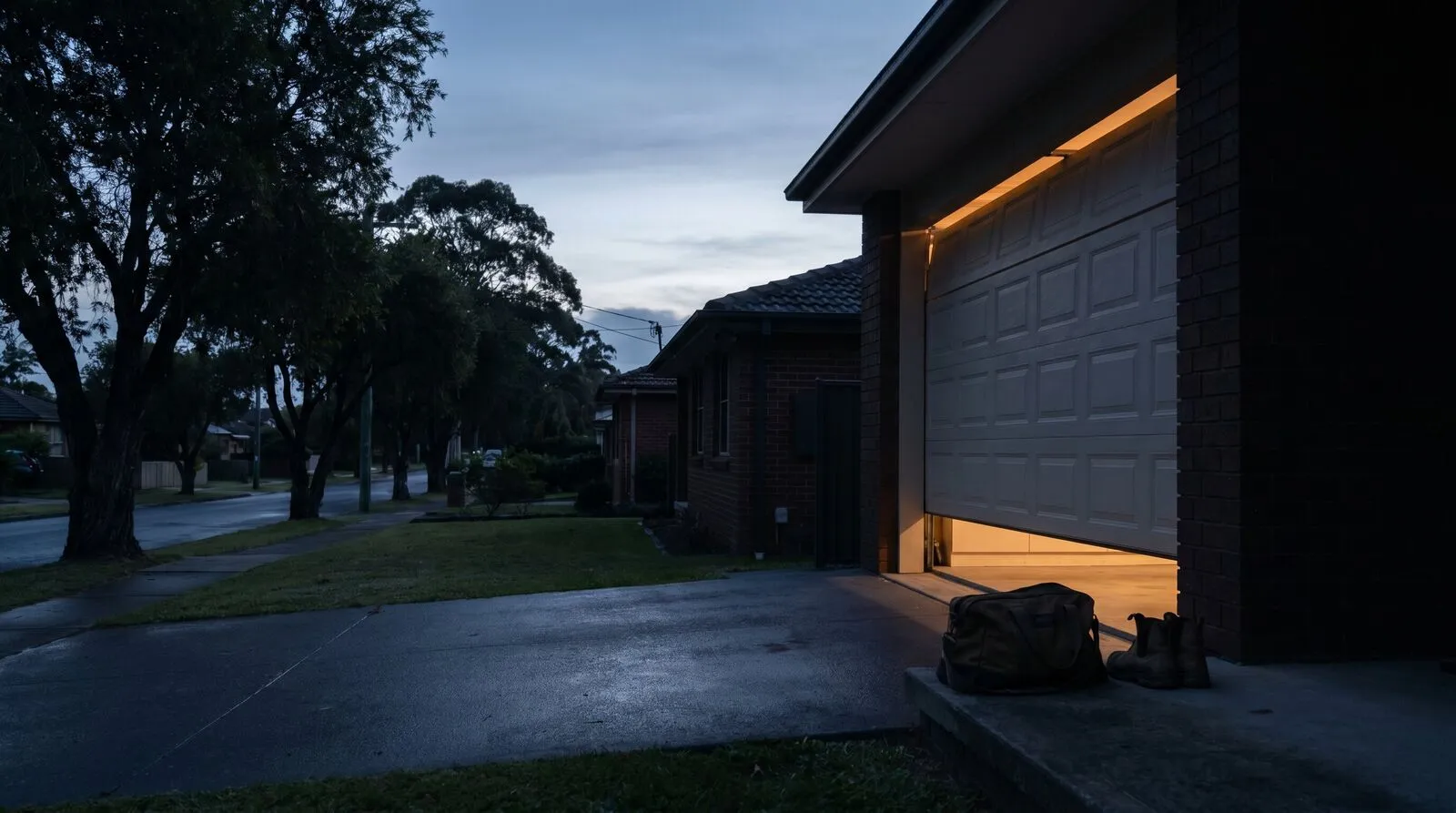
Quiet is a feature here, not a luxury
In a household sleeping around shifts, a banging chain-drive at 5:30 is a real problem, and it has real answers:
- Belt-drive openers run a reinforced rubber belt instead of a chain. Same lift, a fraction of the racket. The standard recommendation when a bedroom sits near or above the garage.
- Nylon rollers instead of worn steel ones take the rumble out of the tracks.
- A proper rebalance stops the opener straining, which is half the noise on older doors.
Openers are talked through by drive type and features, not badge-first. The major Australian opener and door brands are all in reach; what's recommended is whatever suits your door, your garage and your mornings. Any mains wiring on an opener install is done by a licensed electrician.
Colour
Matching the door to the roof and the street
Most Australian door makers offer their steel ranges in the standard Colorbond colour palette, which is why a new door can sit so naturally under an existing Colorbond roof. Two honest notes on that. First, colour is chosen against real swatches at the measure, in daylight, at your house, because screen colours lie. Second, an exact match is offered as a process, not guaranteed as an outcome: paint batches vary and a weathered roof has moved from its original colour. What you'll get is a considered match and a straight opinion on it.