The five faults
What's your door doing?
Loud bang, door won't lift: broken spring
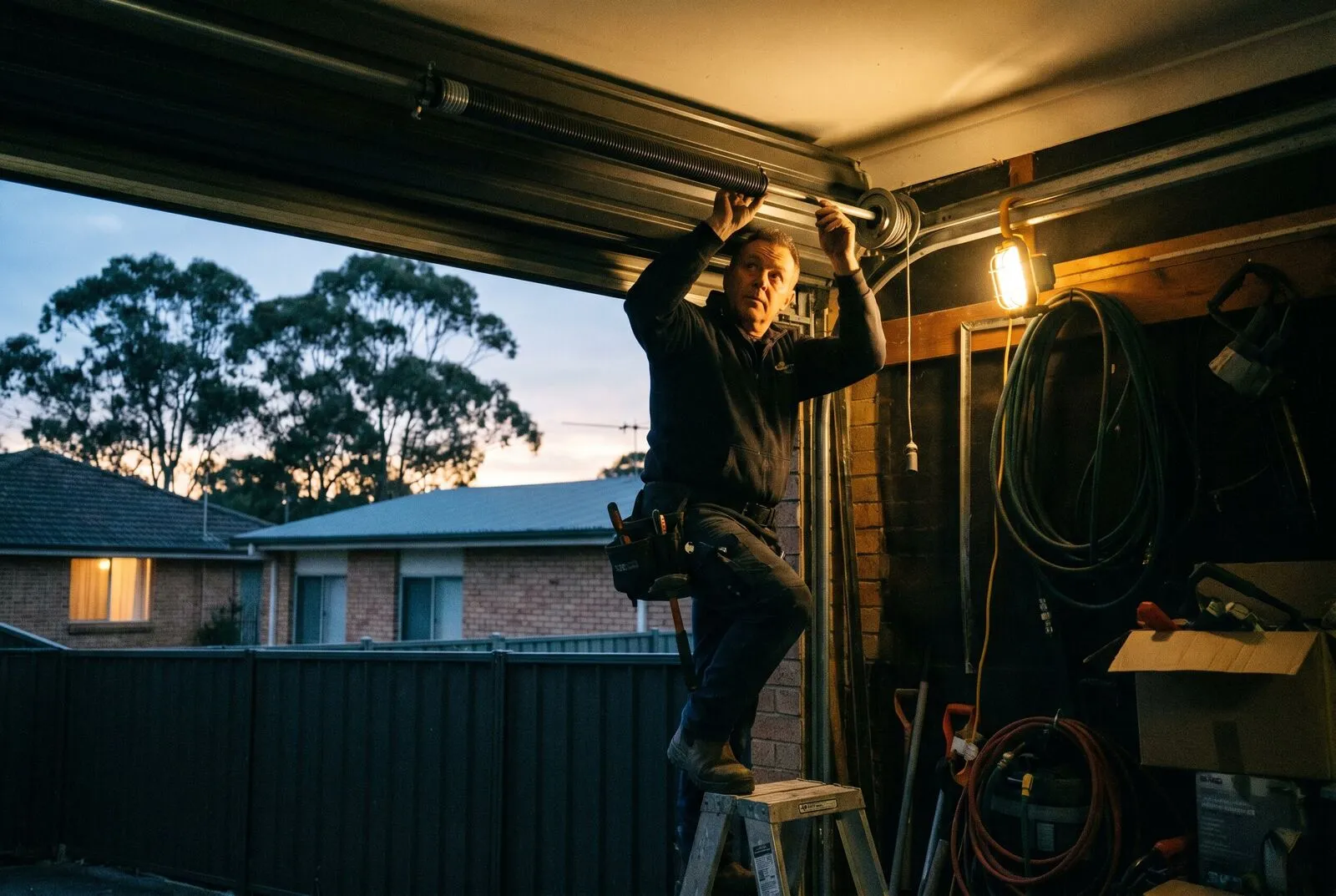
A torsion spring stores the effort of lifting the door so you (or the opener) don't have to. When one lets go it goes with a bang, often in the cold small hours, and the door becomes dead weight. The opener will usually refuse to lift it, and it shouldn't be asked to. Springs are rated in open-close cycles, commonly around ten thousand, which on a working household's door is roughly seven to ten years of mornings. On double doors the honest fix is often both springs at once, because the second one has done the same mileage as the first. There's a full guide to what happened and why: the bang before dawn.
Grinding, jammed or crooked: off the track
Rollers wear, tracks get knocked by bumper bars and bikes, and New Lambton's street trees drop leaves and sap into the running gear. A door that's jumped its track or sits crooked in the opening can drop, so don't force it up or down. The repair is re-railing the door, replacing worn or seized rollers, and straightening or replacing bent track, then checking the balance so it doesn't happen next month.
The motor hums, clicks or does nothing: opener fault
Opener faults split into the motor itself, the drive (chain, belt or screw), the electronics, and the safety gear. Some are repairable on the spot, some mean a new opener is the honest answer, especially on units old enough that parts have dried up. One thing said plainly: the 240-volt wiring side of an opener install or repair is licensed electrical work, and it's done by a licensed electrician. The mechanical fit, rail, tension and programming is the garage door trade's side.
Remote or keypad won't play
Lost remotes, flat or corroded ones, keypads that stopped accepting the code. Usually the cheapest fix on this page: supplied, coded to your opener and tested at the door. Worth bundling with a tune-up while someone's there.
Won't close, or closes then reopens: safety beams
Automatic openers run infrared photo-eyes near the floor. If the beam is blocked, dirty, or knocked out of line, the opener refuses to close, which is it doing its job. In the dark before work this reads as a broken door when it's often a beam. They get checked, cleaned, realigned or replaced, and the auto-reverse behaviour is tested with the door, not assumed.
Nothing's broken yet: rebalance and tune-up
The quiet appointment that prevents the loud one. Spring tension checked and reset, tracks aligned, rollers and hinges lubricated, cables inspected for fray, seals looked over, and anything on its way out named before it fails. On a suburb's worth of doors that have been lifting for decades, this is the most honest money a door owner can spend.